How to Build (or Buy) a 1080p Gaming PC Under €1000 in 2026
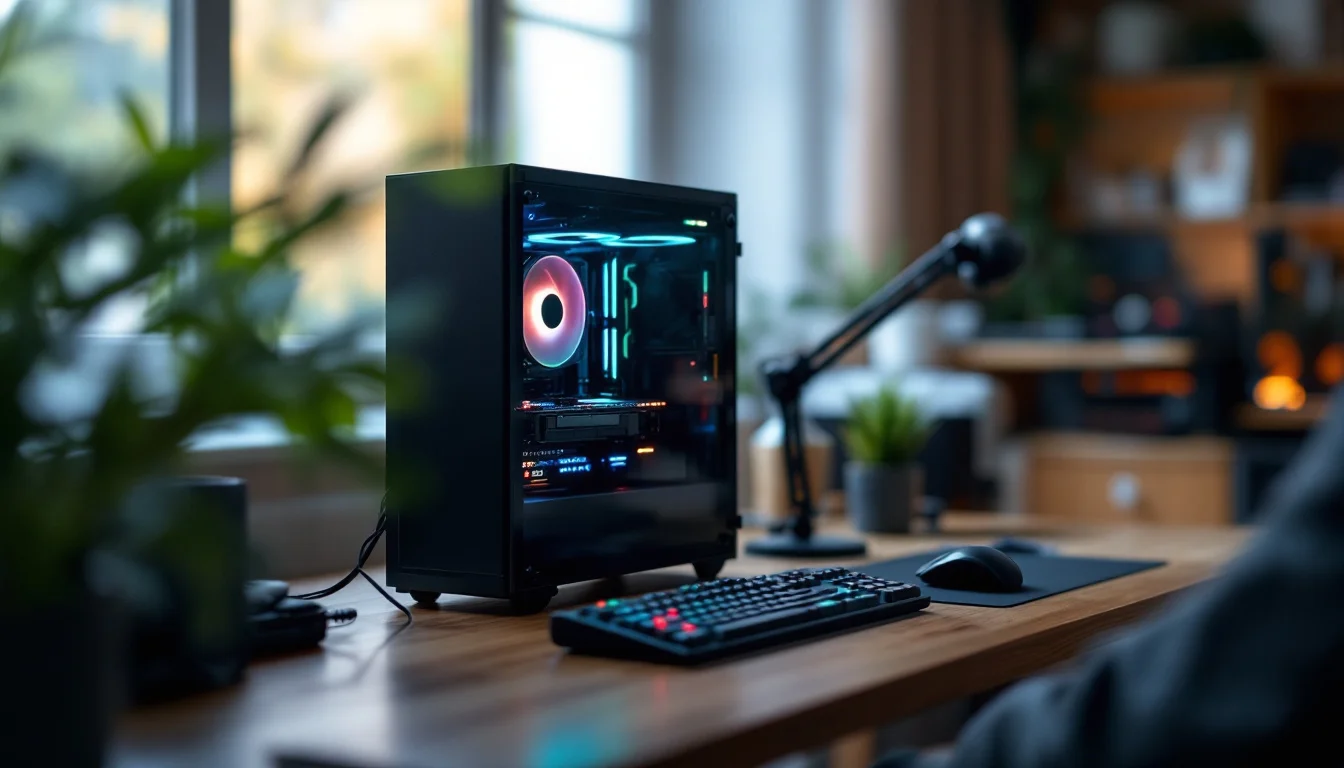
The traditional wisdom of PC gaming has long dictated that assembling your own computer from individual parts is the definitive way to save money and maximize performance. In 2026, that longstanding rule is challenged under the weight of sustained component inflation. The hardware market has squeezed the budget tier to difficult limits, forcing a complete reevaluation of how consumers approach entry-level and mid-range systems.
PCWorld states that a $1,000 (USD) gaming PC is still possible in 2026, but the compromises are much harsher than a few years ago. Navigating this specific price point requires abandoning aspirations of broad future-proofing. Buyers attempting to construct a high-end system with lots of upgrade headroom will immediately hit a financial wall.
Instead, at this price, you should aim for strong 1080p gaming and acceptable 1440p performance. Achieving a functional, high-performing rig for under €1000 now requires ruthless specification discipline, strict compromises on memory, and a willingness to explore retail channels that the enthusiast community historically ignored.
Key Takeaways
- The 1080p Baseline: A successful 2026 build targets peak performance at 1080p rather than chasing 1440p or 4K resolutions.
- Component Discipline: For an under-€1000 gaming PC in 2026, the most logical configuration combines a 6-core processor (Ryzen 5 5600 or Core i5-12400F), an RTX 5060 or RX 9060 XT, 16 GB RAM in dual-channel, a 1 TB NVMe SSD and a quality 650 W power supply.
- Performance Expectations: This precise configuration creates a 1080p system that is very smooth in competitive games and runs most AAA titles at high settings with DLSS or FSR.
- The Sourcing Strategy: Current market anomalies sometimes make pre-assembled retail machines a better financial choice than ordering individual parts.
Can You Still Build a Gaming PC Under €1000 in 2026?
The fundamental conflict in constructing a modern budget PC lies in the tension between perceived minimum requirements and actual financial limits.
PCWorld's minimum acceptable specification list for a new $1,000 (USD) gaming PC illustrates this ambition: a 6-core CPU no more than one generation behind, 32 GB of RAM, 1 TB of Gen4 SSD storage, a recent-ish GPU with 8 GB VRAM, and an adequate power supply from a reputable brand. On paper, this sounds like a balanced, modern machine. In practice, executing this exact component list fundamentally breaks the target budget. When tested, PCWorld's hypothetical $1,000 build ended at a subtotal of $1,178.80 (including $10 to ship the case from Newegg) and a grand total of just under $1,250 with Pennsylvania sales tax.
Spec Discipline
To keep the price tag under €1000, buyers must adopt a stricter approach to system memory. The financial mechanics are straightforward: a budget allocated to RAM directly eats into the budget for other vital components if not carefully managed. Forcing 32 GB into an under-€1000 budget would mean cutting back on the graphics-card budget, severely crippling the machine's primary function in order to hit a memory capacity that most games do not strictly require at 1080p.
| Build Philosophy | Memory Target | Hardware Trade-off | Final Price Reality |
|---|---|---|---|
| The US Standard (PCWorld) | 32 GB RAM | Pushes beyond budget limits | Approaches $1,250 USD with tax |
| The EU Baseline | 16 GB dual-channel | Preserves GPU budget | Stays under €1,000 |
By accepting the 16 GB dual-channel baseline, builders protect the budget for the graphics card and processor. Dual-channel configuration ensures the system memory runs at maximum bandwidth, providing the necessary responsiveness for competitive gaming without triggering the budget failure demonstrated by the 32 GB mandate.
Is 8 GB of VRAM Enough for 1080p Gaming in 2026?
Maximizing visual performance at this price tier means focusing on stable, proven capacities. A highly contested topic among hardware enthusiasts is whether 8 GB of Video RAM (VRAM) is sufficient for modern gaming. However, PCWorld cites Valve's position that 8 GB of VRAM should handle the vast majority of recent games, which informs its 8 GB-class GPU target for a $1,000 build. Choosing an efficient 8 GB card, such as the RTX 5060, keeps the budget intact while delivering the graphical horsepower needed for fluid 1080p experiences.
The Power Supply Anchor
While the graphics card dictates the frame rate, the foundation of any reliable machine is its power delivery. A common error in budget builds is pairing a large graphics card with a mediocre power supply in an attempt to save money. This creates immediate system instability and risks damaging expensive components over time.
Securing reliable power should never be compromised, even when aggressively cutting costs elsewhere. A well-rated 650 W unit comfortably handles the peak power draws of a 6-core CPU and an 8 GB graphics card, ensuring the system remains stable under heavy gaming loads while leaving enough headroom for eventual mid-cycle upgrades.
Why Buying Prebuilt Sometimes Beats Building in 2026
Perhaps the most counter-intuitive reality of the hardware market is the potential financial advantage of buying a commercially assembled system. PCWorld (2026) frames the current environment as one of the very few market conditions in which a pre-built PC makes sense even for people able and willing to build their own. This is because large PC makers may hold component inventory bought at lower prices. Wholesale purchasing agreements insulate major Original Equipment Manufacturers (OEMs) from the volatile retail pricing that currently plagues the individual consumer market.
The Wholesale Price Advantage
This dynamic is evident in current retail offerings. For example, Eneba highlights the MSI Codex R2 as a top choice under $1000. It is often hard for an individual consumer shopping for distinct parts under €1000 to match the price of an OEM's exact list of components, complete with a retail OS licence and peripherals.
Beyond simple component costs, the prebuilt route offers significant risk mitigation. Building your own PC stays educational if you know exactly what you are doing, but a mistake quickly costs a lot in money and time. These errors can include:
- Installing too small a power supply, leading to system crashes.
- Purchasing a motherboard with a BIOS that needs updating before it recognizes the CPU.
- Seating RAM in single channel, heavily bottlenecking processor performance.
Local Retail Availability
This shift toward pre-assembled systems is supported by local retail infrastructures. MediaMarkt België maintains a dedicated gaming-PC category page on its Belgian web shop, confirming a mainstream local retail channel for buying prebuilt gaming PCs. This immediate availability removes the shipping costs and logistical wait times traditionally associated with ordering custom parts.
FAQ: Finalizing Your €1000 Decision
Should I abandon desktops and buy a console or a handheld for €1000 instead?
Dedicated gaming devices offer very different value propositions depending on your goals. For comparison with a $1,000 gaming desktop, PCWorld states console gaming currently ranges from $400 USD for the Xbox Series S to $750 USD for the PlayStation 5 Pro. These consoles provide optimized, plug-and-play experiences for significantly less money, though they lock the user into closed software ecosystems.
Conversely, the portable PC market struggles to compete on raw performance at this price tier. PCWorld notes that the ROG Xbox Ally X at $1,000 USD retail is nearly as expensive as its imaginary desktop build while being nowhere near as powerful. If raw gaming horsepower and frame rates are the primary objectives, dedicating the €1000 to a strictly disciplined desktop build—or leveraging the pricing anomaly of a prebuilt machine—remains a stronger investment in raw frame rates than high-end handhelds.
Is 16 GB of RAM enough for modern gaming?
Yes. While ambitious build lists often suggest more, 16 GB of RAM in dual channel (two 8 GB sticks) is the logical baseline for gaming in 2026 at this budget. Most games do not strictly require 32 GB at 1080p, and sticking to 16 GB protects the budget for your graphics card.
Conclusion: The Next Horizon for PC Prices
The economic pressures currently defining the desktop hardware market are not temporary spikes that will resolve in the coming months. PCWorld states that prices for RAM and other PC components will remain high for another year or two at least, possibly much longer. Consequently, delaying a purchase in hopes of a sudden return to the hyper-affordable DIY era is an ineffective strategy. Navigating this environment requires accepting the strict hardware boundaries of the €1000 tier and, in some cases, capitalizing on the wholesale pricing advantages currently held by large manufacturers. As the industry continues to absorb sustained component inflation, adhering to strict specification limits helps preserve performance at 1080p.